First of all we are going to do a form-schedule of the main parts of this first movement.
Exposition (B.1-59)
Theme A (B.1-13)
Fugal Part (B.14-23)
Rhythmical part (B.24-36)
Theme A’ (B.37-44)
Theme B (B.45-58)
DEV. (B.59-125)
Theme A’’(B.59-63) transition
Fugal Part (B.64-85)
Groovy part (B.86-104)
Fugal part (B.105-111) transition. Extension (B.112-119) Variation B (B.120-125)
Recap. (B.126-210)
Pseudo recap.(B.126-132)
Theme B’ (B.133-146) inverted
Rhythmical part (B.147-159) inverted
Theme A’’’’(B.160-176) inverted
CODA (B.177-END)
We also could say that we have a Two Part Exposition, because between theme A and B there is a quaver silence or medial cesura. (B.44). Picture below.

Bartók use the idea of pitch-center around Bb to compose this quartet. The Bb is not the tonic, but is the most used note in the whole piece and also in the first 13 bars, where we can listen all the elements of the piece, then it develops and “modulates”. Picture below. 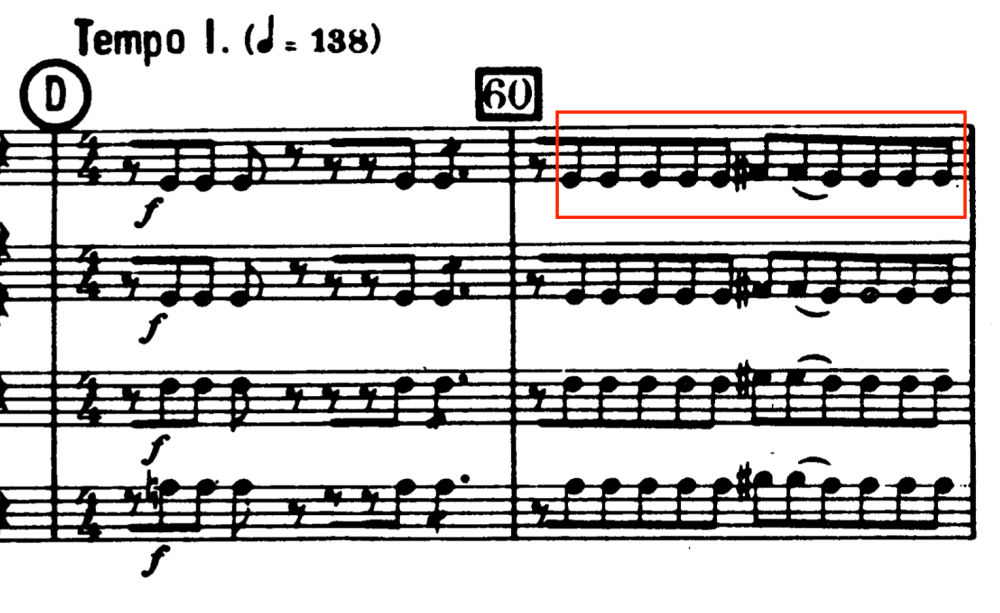
Sometimes Bártok tries to run away from Bb as a pitch-center and he goes to E, but at the end he comes back to the original pitch-center, Bb. Picture below.
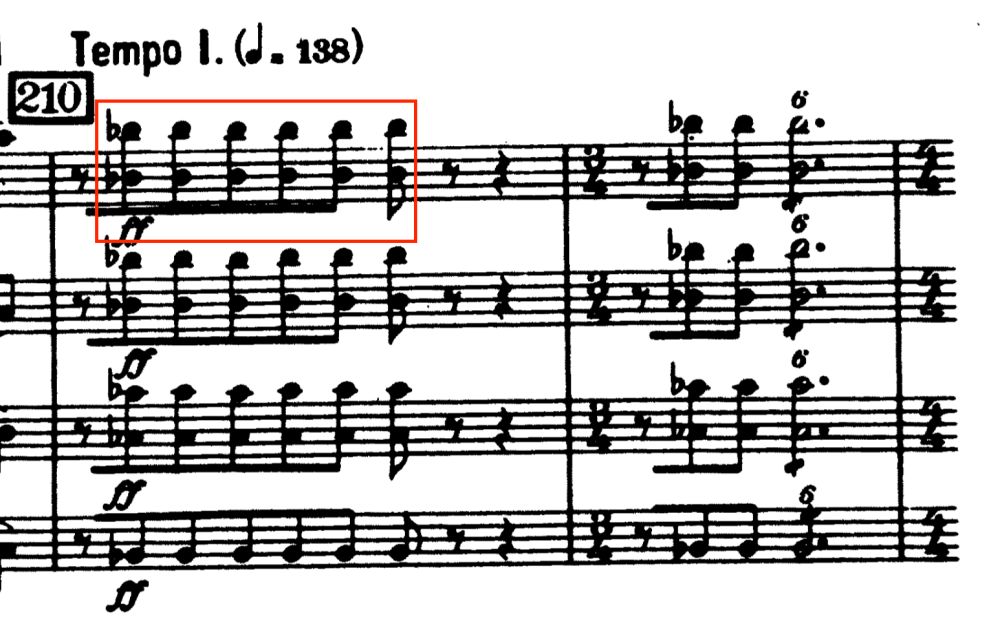
Use of chromatic cel—> B.8, with notes in between. The composer use a lot to chromatic motives that appear all over the piece. Picture below. 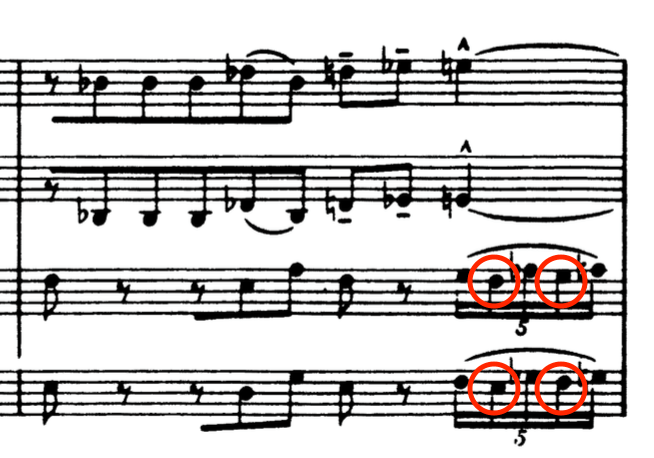
B.12, natural-flat. Picture below.
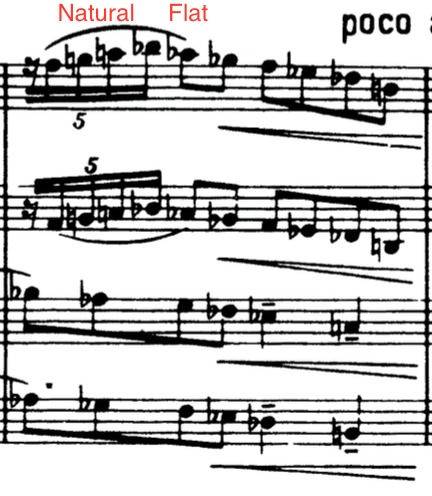
B.15-17, use of chromaticism in vertical way using minor seconds. Picture below.
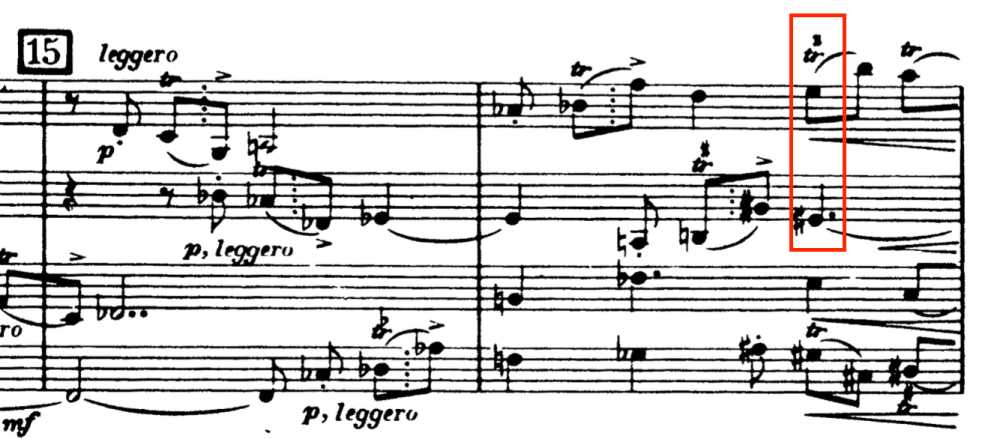
Diatonism—> B.9 The viola plays a diatonic scale in D flat but the E of the Violin destroys the effects to create more contrast. Picture below.
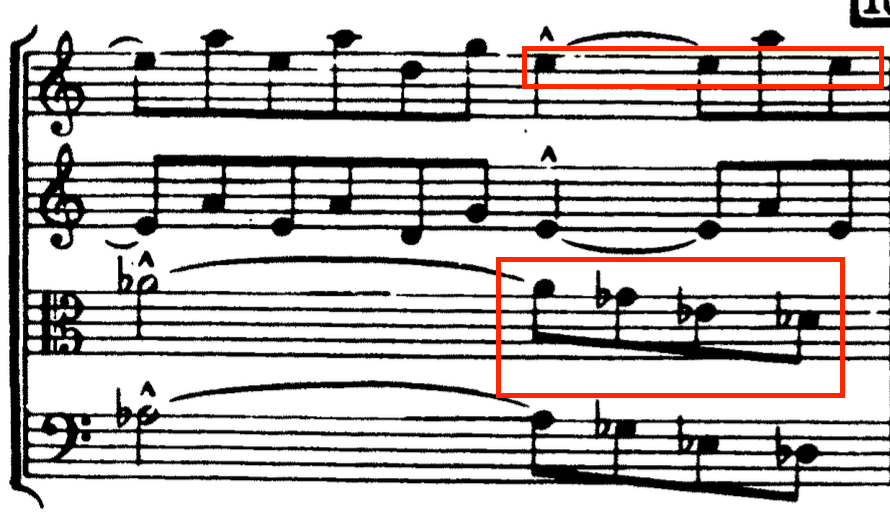
Whole tone —> B.12-13 use of contrasting element to the chromaticism, creating other colors to keep it interesting. Picture below.
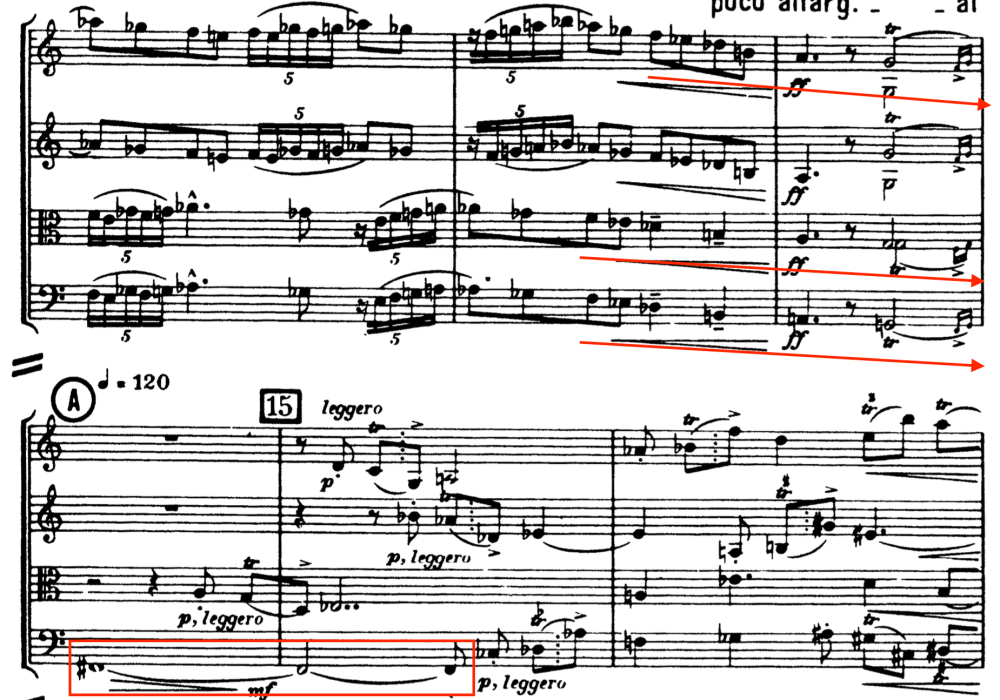
About the rhythm we can say that is getting shorter every time, like the first motive and helps to mark the counterpoint. There are also extra dotted baronies to help the musicians where the strong beat should be.
 Ovidi Martí Garasa