5th Symphony
First movement
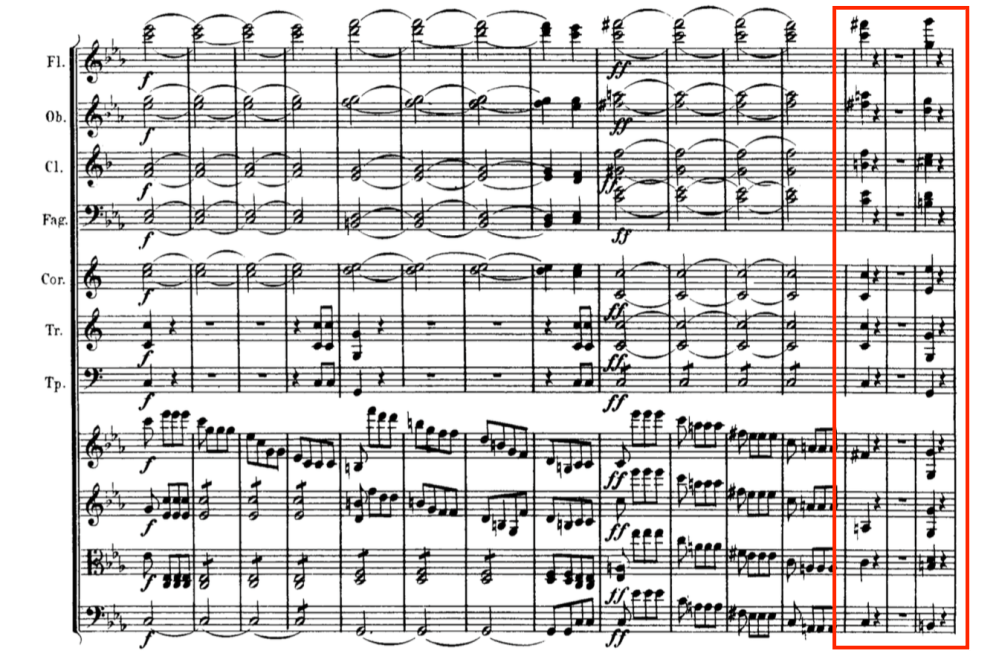
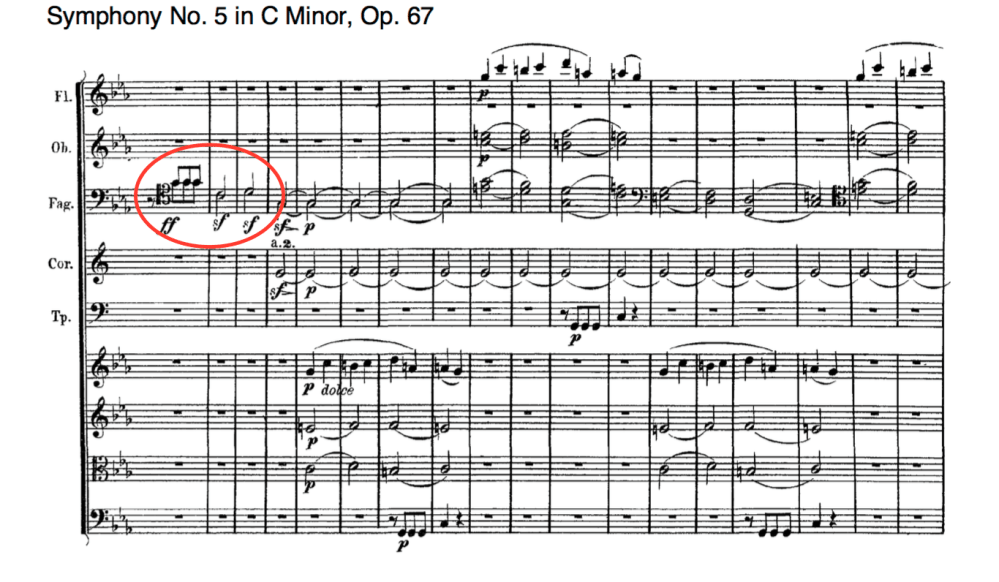
We can use this movement as an example of Two Parts Exposition,the medial cesura its very clear between the two themes, you can see it in the pictures below. The thing is that before the real beginning of B we have a kind of reminder of the first theme played by the horn (only 3 bars) that that ends up in the beginning of Theme B.
Second movement
On this movement we focused in transcript the first 38 bars of the melody line. That line changes between different instruments like cello, flute, oboe, violin, bassoon, clarinet…
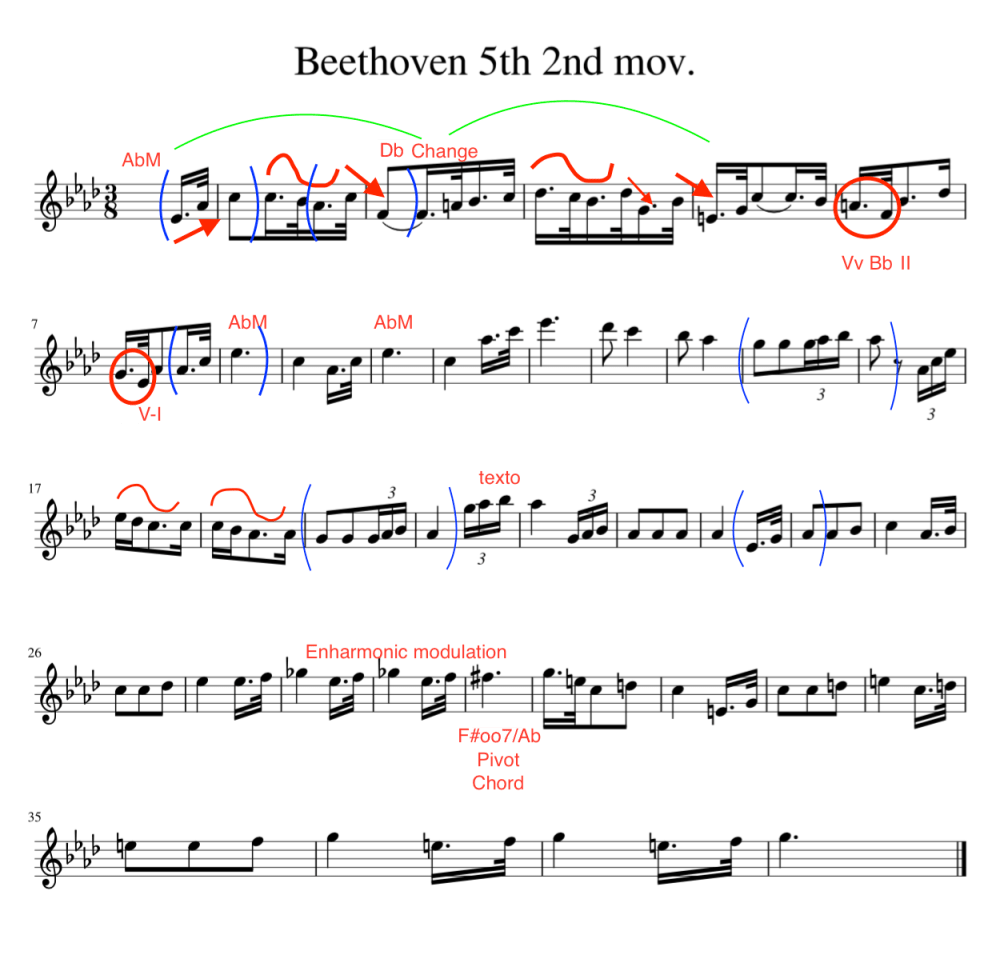
We also did a motivic analysis of the motives that Beethoven uses to create this beautiful theme, on the picture I’ve tried to apply what we did in class, dividing the different cels that are on the first part of the theme. He started with a broken chord, put some inverted cels, repeat motives, jumps, scales…
On the other hand, the second part is more calmed, talking about figuration, but we have one of the most interesting points, a chromatic modulation, using a Gb that «changes» to a F#, it produces a modulation from AbM to CM.
7th Symphony
First movement
Now we are going to focus on the form-schedule of the first movement. First of all we have to say that this movement has a continuous exposition, and it’s very difficult to say where is exactly the beginning of the second theme.
Introduction (B.1-62) here we have a long introduction, we also can listen one clear theme but this is not Theme A from the sonata-exposition, because we are still in the introduction.
Exposition (B.63-177)
Theme A (B.64-101) The beginning of the theme (AM) is played by the flute and clarinet/fagot sometimes, it also has a part with question and answer between the good winds and strings, and then the violins and horns the theme with a different dynamic, forte instead of piano.
Transition (B.102-129)
Theme B (B.130-141)
Transition (B.142-163)
Theme A (B.164-176)
Development (B.177-287)
Recapitulation (B.287-417)
Theme A (B.287-318) now, instead of repeat the theme with other dynamic Beethoven repeats in minor. (B.319-341)
Transition (B.342-370)
Theme B (B.371-382)
Transition (B.383-404)
Theme A (B.405-417)
CODA (B.417-END)
Second movement
First of all we are going to do the form-schedule of this movement.
Theme A (B.1-101) inside of this theme we have a-a’-a’’-a’’’the most notable differences between that subsections are the dynamics, going from piano to fortissimo.
Theme B (B.102-149) in this part the rhythm is more relaxed, and the melody is going between the flute, clarinet and the bassoon(at the end).
Theme A (B.103-136) here we can see Theme A again, in these case a’’’’+ an extension to continue with a FUGE.
Fugue (B.137-167) a part of this fugue is based on the begging of this second movement and a faster figuration.
Theme A (B.168-177) here we have a’’’’’ and it’s working like a transition to go to last theme B.
Theme B (B.178-201) again the B working as a transition to the final CODA.
Coda (B.202-END) here we have the coda made by material of end of theme A.
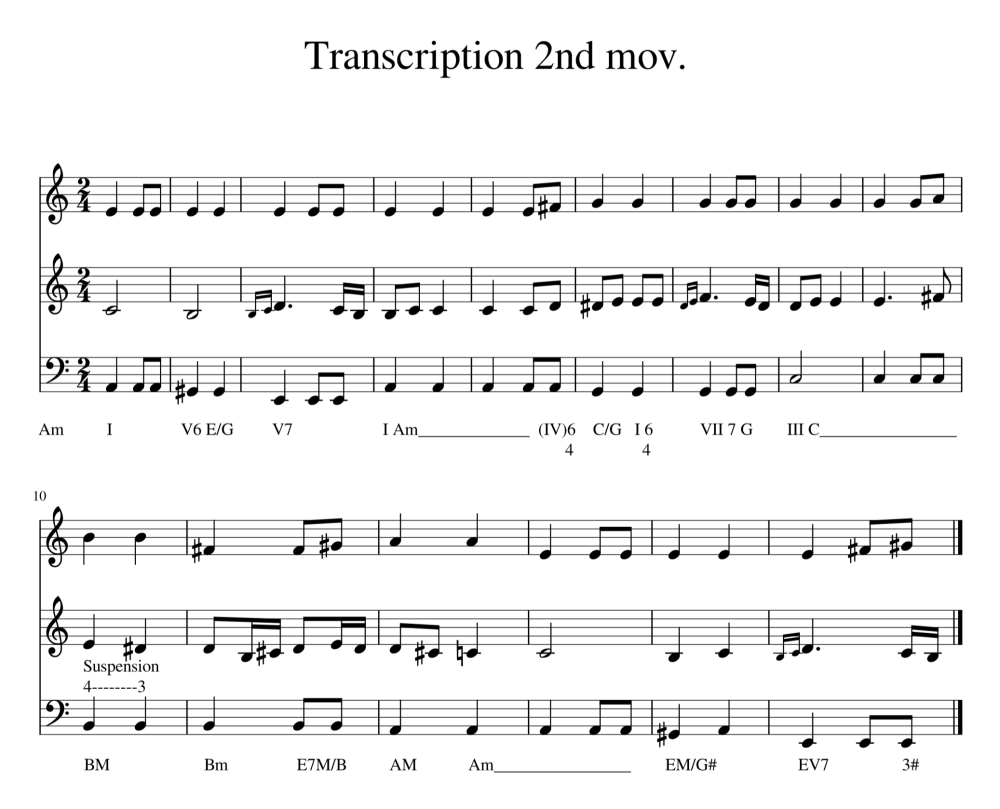
And we also did a transcription of the beginning of this movement, focusing only in the three leading voices, analyzing the harmony of this fragment.
 Ovidi Martí Garasa